





![Alberto Beingolea: “If they insist on not giving [the powers], they are complicating life for Peru”](https://insightermedia.com/wp-content/uploads/2026/09/bb3fa9e11304ea13fe2cd333955007bc-150x150.webp "Alberto Beingolea: “If they insist on not giving [the powers], they are complicating life for Peru”")



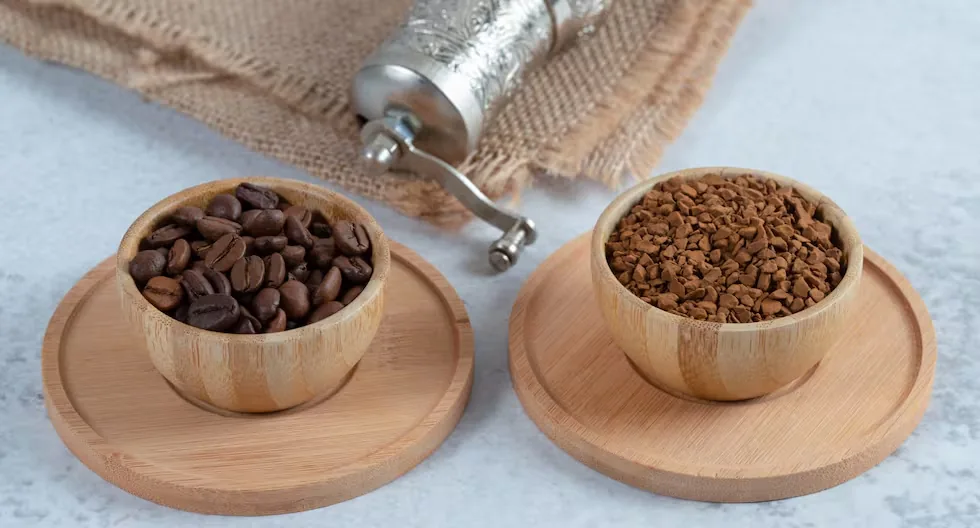
In cities like Lima, coffee has ceased to be a simple morning beverage to become a declaration of lifestyle. The rise of specialty coffee shops has led us to meticulously choose each origin, process, and flavor profile. However, this boom has also instilled an increasingly widespread idea among black gold lovers: that specialty coffee is “healthier,” while instant coffee is “of lower quality.”
LOOK: Maca vs. ashwagandha: which is the best ally to beat stress and regain energy?
From a nutritional point of view, coffee is a beverage with multiple bioactive compounds. As explained by Dr. Mayra Anticona, research professor of the Nutrition and Dietetics program at the Universidad San Ignacio de Loyola to Somos, it contains chlorogenic acids —powerful antioxidants—, in addition to caffeine, trigonelline, and melanoidins, associated with the reduction of oxidative stress and possible metabolic benefits.
For his part, specialist Francesco Rufas, Professor of Marketing at EAE Business School, pointed out that coffee responds to a very daily need: to activate us, sustain the rhythm of the day, and also structure our social routines.
But when we set aside the experience and focus on what’s inside the cup, the line between well-being and perception becomes less clear. Amidst the bad reputation of instant coffee and the status of specialty coffee, an inevitable question arises: is there really a difference in terms of health, or are we facing an idea closer to marketing than to evidence?
The specialty coffee boom
One only needs to walk through districts like Miraflores, San Isidro, or Barranco —or simply scroll through the Instagram or TikTok feed— to notice that specialty coffee shops are everywhere, with aesthetic cups with latte art, wooden bars, baristas explaining tasting notes, and blackboards detailing the bean’s altitude.
This explosion, without a doubt, is no coincidence. For nutritionist Giulianna Saldarriaga, from Clínica Internacional, this phenomenon responds to a profound change in the Lima consumer. “Coffee is no longer sold merely as a beverage, but as an experience that encompasses everything from the origin of the bean and the extraction method, to the aroma and the ambiance of the coffee shop for social media.” She also highlighted that there is a key factor of local pride, as Peru produces very high-quality coffees, which has driven a genuine interest in valuing what is local.
But beyond the experience, the rise of specialty coffee also reveals a more complex consumption logic. According to the marketing expert, the motivations behind consumption combine activation, flavor, and lifestyle, though not always with the same weight.
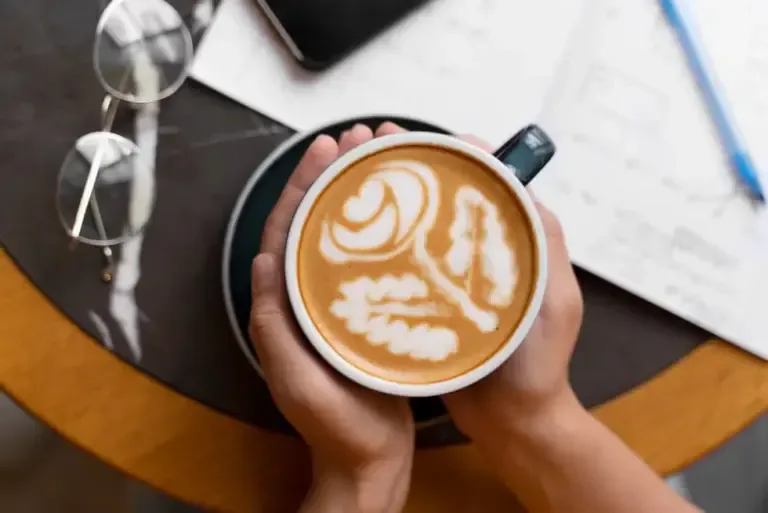
“Many people are drawn to coffee first because it helps them wake up or concentrate, but then their motivations evolve towards aroma, body, or acidity. For others, the value lies in the sophisticated lifestyle, identity, and sense of belonging to a community generated by socializing in these spaces.”
However, health is rarely the initial driver. Although some consumers justify their choice by antioxidants, the truth is that the habit is usually built first from taste, routine, or the need for activation, and then reinforced with healthy arguments.
Added to this is that specialty coffee has found its best ally in social media through the “Instagram effect”: the tendency to associate what is visually attractive with higher quality, and even with health benefits.
Nevertheless, the fundamental error lies in confusing sensory quality with nutritional quality. While the former relates to taste, aroma, and presentation, the latter depends on the real impact on the body. As Saldarriaga clarified, a cup of specialty coffee can be a work of art without being more nutritious than homemade coffee, as both can provide similar antioxidants.
This bias is also reinforced by the idea that “artisanal is always superior.” In this regard, Marilyn Montejo, dean of the Nutrition and Dietetics program at the Universidad Científica del Sur, assured that this belief significantly influences purchasing decisions, but warned that not everything industrialized loses quality, just as not everything artisanal or premium is automatically healthier.
Specialty vs. instant: what you’re really drinking
To understand if we are paying for well-being or for an ingenious commercial narrative, we must look at what is really in the cup.
On one hand, there is specialty coffee, which is not a mere fashion label, but responds to an extremely strict technical standard. According to Karen Velásquez, nutrition coordinator at Clínica Ricardo Palma, it involves high-quality beans evaluated under an international scoring system.
“It generally comes from high-altitude crops, over 1200 meters, which refines its sensory characteristics and allows it to achieve scores of 80, 85, 90 points or more.”
Read more Villena Bridge: between delays in the works and the lack of safety during maintenance
In the same vein, nutritionist Giulianna Saldarriaga added that behind it there is a meticulous sensory evaluation where the origin, traceability, cultivation process, and type of roast are highly valued. “The idea is to highlight the unique flavors and aromas of coffee, a complex process that is very similar to what happens with wine tastings,” compared the specialist.
On the other side is instant coffee, dragged down by a bad reputation on social media that labels it as an artificial or harmful product. However, science indicates the opposite. “Instant coffee is still coffee. As long as it is a 100% coffee product, it largely maintains its properties,” Velásquez emphasized, detailing that the only difference is that it goes through an additional process where it is ground, mixed with water, and then dehydrated.
In this regard, Dr. Anticona stated that this format is obtained through industrial methods such as spray drying or freeze-drying. The latter —a cold drying process— helps stabilize antioxidants and aromatic compounds, reducing their deterioration. Thus, although there is a slight loss of polyphenols and volatile compounds compared to a freshly ground bean at a bar —which mainly affects aroma and flavor—, whoever dissolves a spoonful of pure instant coffee still consumes a significant dose of caffeine, chlorogenic acids, and melanoidins with very relevant antioxidant activity for health.
The real trap: what coffee labels hide
The real nutritional danger is not in the jar of traditional instant coffee, but in the confusion that exists in supermarket aisles, where not all products are equal. In this context, Saldarriaga warned about the enormous difference between pure soluble coffee and commercial blends: “A 100% instant coffee product should only have one ingredient on its label: coffee. In contrast, a ‘3-in-1’ product usually includes sugar, flavorings, and additives that completely change the nutritional profile, providing an excess of added sugars.”
Therefore, rather than choosing between specialty or instant coffee, nutritionists emphasized the importance of paying attention to labels:
- Quality indicators: The label should declare only “100% coffee” or “soluble coffee.” It is an excellent sign if it specifies the type of bean (such as Arabica or Robusta) or its origin. Additionally, it is advisable to opt for “freeze-dried” coffees, as this technique stabilizes and preserves antioxidants and aromatic compounds much better during storage.
- Warning signs: Products that include added sugars, syrups, hydrogenated vegetable fats, creams, colorants, or artificial flavorings should be immediately distrusted. In these flavored powders, the actual coffee content is minimal, and what predominates are ultra-processed ingredients harmful to metabolism.
At the end of the day, this tension between both worlds reveals that in the dispute there is much more marketing than science. As Francesco Rufas rightly mentioned, instant coffee has been commercially positioned as the practical, economical, and accessible option for quick consumption at home or the office, while specialty coffee is sold as a carefully crafted experience, with identified origin, high traceability, and an obsession with flavor.

The problem arises when one tries to convert that evident sensory superiority into an automatic health advantage. A specialty coffee can have an extraordinary cup profile and a transparent production chain, but that does not necessarily make it healthier than an instant coffee, which is also not harmful simply because it is cheaper or processed.
The real problem is not coffee
The balance of science forces us to look beyond the trend and accept that the real problem for health has never been the type of coffee, but habits and accompaniments.
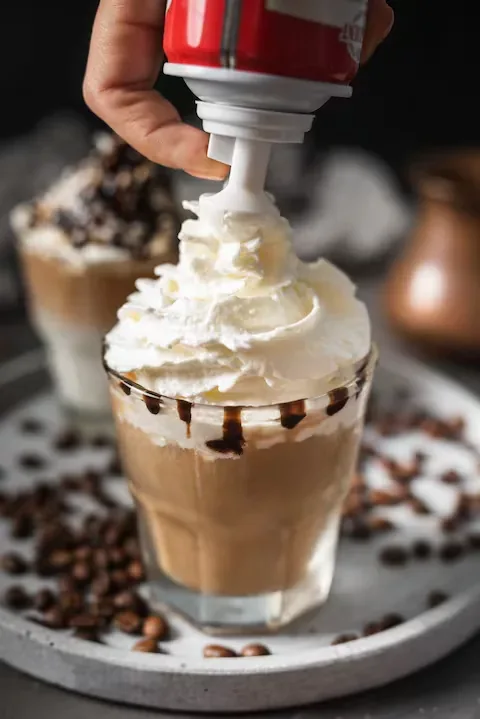
In this sense, Dr. Anticona is emphatic, because from a metabolic point of view, a specialty coffee loaded with syrups, sugars, creams, and toppings is much more harmful than an instant coffee consumed completely black.
“The main problem is not coffee itself, but the excess of added ingredients, especially sugars and saturated fats that skyrocket caloric intake and promote metabolic alterations if consumed frequently. Likewise, the addition of creams and other ingredients can modify the bioaccessibility of coffee’s phenolic compounds. For example, sugar and non-dairy creams can delay the absorption of some antioxidants by modifying gastric emptying.”
In contrast, pure instant coffee, free of additives, still provides caffeine and chlorogenic acids with virtually no caloric impact, allowing the body to take advantage of the solid scientific evidence that associates moderate coffee consumption with a lower risk of type 2 diabetes and cardiovascular diseases.
Therefore, beyond consuming whole bean or instant coffee —as nutritionist Karen Velásquez commented— it is important to avoid adding other ingredients, check labels, and, above all, maintain an ideal consumption of three to four cups a day without exceeding 400mg of caffeine, thus integrating the beverage as part of a balanced lifestyle.
Similarly, it is essential to look at the consumer themselves and not just the recipient. As Montejo rightly pointed out, factors such as personal sensitivity to caffeine or specific medical conditions end up being more determining than the origin of the bean. That said, the harmful effect can appear if consumption alters sleep patterns, causes palpitations, or triggers episodes of nervousness, aspects that require evaluating coffee consumption not as an isolated element, but within the integral context of each individual’s diet.
Read more Dollar price in Peru today, Friday, June 5: what is the exchange rate of the day
- AI patch against breast cancer: How the method that alerts anomalies in 15 minutes from home works
- Polycystic ovary syndrome changes its name: what this shift in medicine reveals
- The “dating market” after 30: the challenge of meeting people when you’re no longer looking to “see what flows”
- Excessive love or total disconnection? Why some people suffer so much for animals and others seem unaffected
- Couple or roommates? What the lack of sex in a relationship evidences